The figure you came here for is not in this article. It is on your own account page, under Identification, and it can differ from anyone else’s, including the one in a screenshot somebody posted to a forum. What this page can do is explain what each verification state is for, what moves you between them, and which of your restrictions have nothing to do with your state at all. One thing worth being blunt about before any of that: no state makes money safe. What you move through the account can come back as nothing.
Where your number is written down
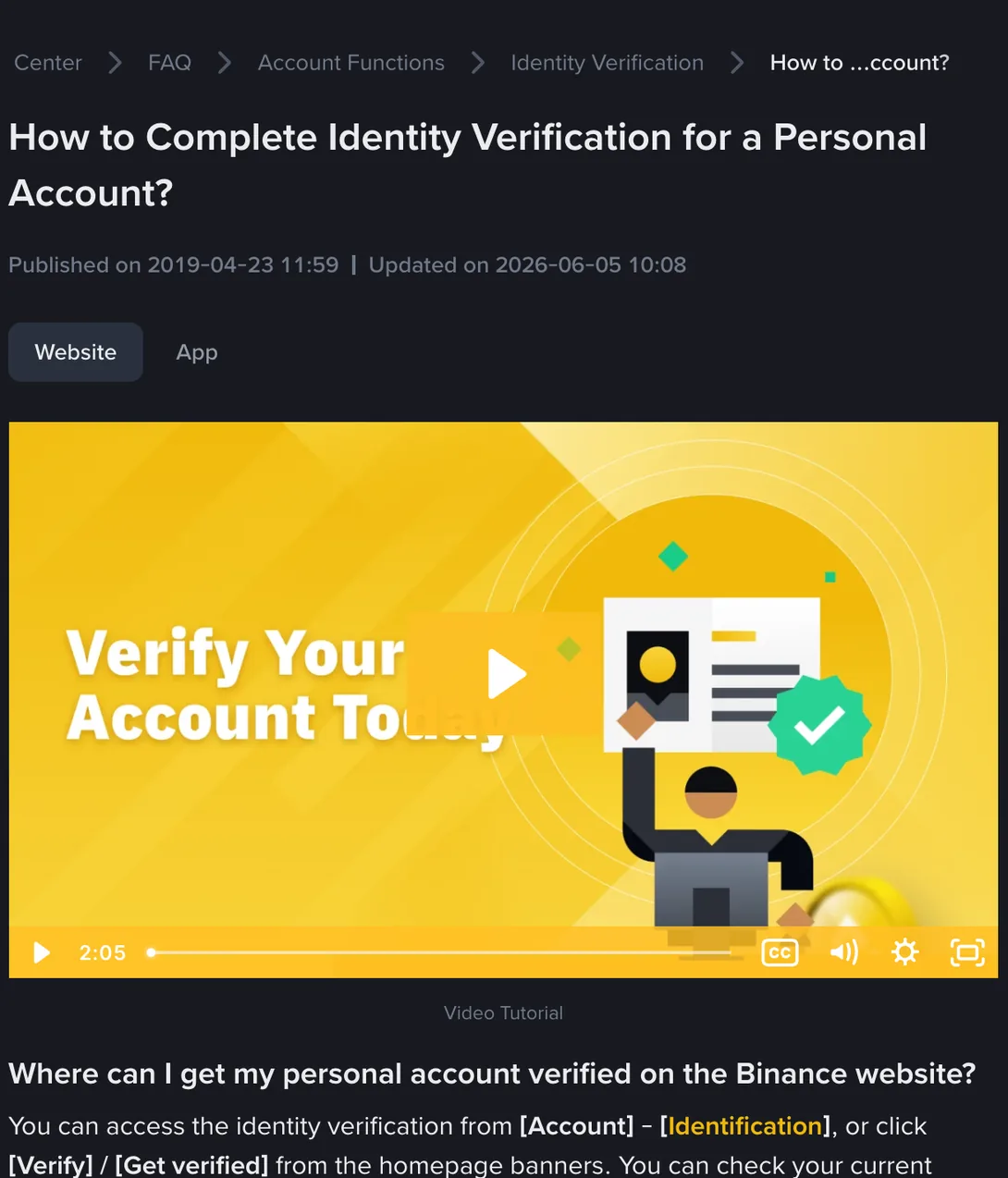
Binance’s identity verification guide gives the route in its first line of body text:
You can access the identity verification from [Account] - [Identification], or click [Verify] / [Get verified] from the homepage banners.
That is the whole of it. Open that page and it shows the state your account is in and what that state is worth in figures, for you, today, in your country.
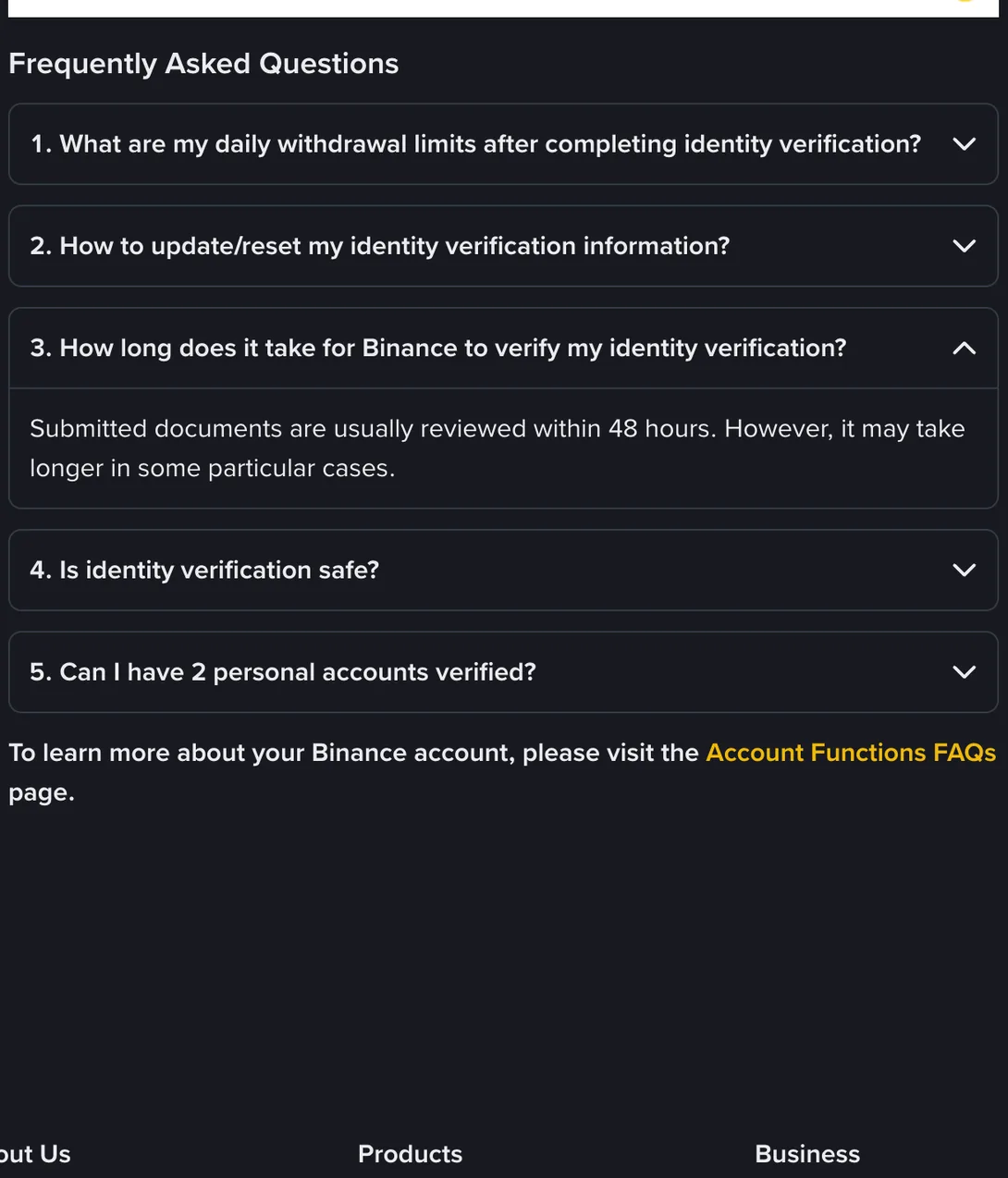
The help page also has a set of questions folded up at the bottom, and the first one is titled: what are my daily withdrawal limits after completing identity verification. Notice what that tells you. The most-asked question about limits sits on a page that has no table on it, and it is collapsed by default, so a browser search of the page will not even find it. A platform that publishes a fixed number publishes it. One that keeps sending you to your own account is telling you the value depends on things it will not enumerate.
So this site does not print those figures. Not out of caution for its own sake: a number that varies by country, by product and by month is worthless a few weeks after it is written, and readers still find the page a year later.
Why don’t the tier tables you find match your screen?
Search for Binance verification levels and you will find neat tables with names in them. Basic, intermediate, advanced. Level one, level two, level three. Different articles use different sets, and readers assume theirs is the outdated one.
The likelier explanation is that those names were copied from somebody’s screen, in some country, at some point, and then copied again from that copy. Ask two questions of any such table: does it say when it was written, and does it say where the author was. Most say neither.
The practical consequence is small but annoying. Someone reads that they need to reach the intermediate tier, goes looking for it on their own page, does not find anything with that name, and concludes something is broken with their account. Nothing is broken. The wording differs.
Which is why the rest of this page describes states by what they are, not by what they are called.
The states, and the question each one answers
Underneath the naming, the structure is stable, because each step up asks a different question and needs a different kind of evidence.
| State | The question it answers | What it usually takes |
|---|---|---|
| Registered, not verified | Nothing yet. An email address or a phone number opened the account. | No documents. Most of the useful screens send you off to verify before they will do anything. |
| The basic verified state | Who are you? Compared against a document and a face. | Both sides of an identity document, a liveness recording, and the confirm-information screen. |
| The state after address verification | Where do you live? Compared against a third-party document with your name and full address on it. | A recent utility bill, bank statement or similar, issued inside whatever window applies where you are. |
| Beyond that | Where did the money come from? | A written explanation of a deposit or of your overall position, with documents that agree with it. |
They do not always arrive in that order, and not everyone meets all of them. Some people finish the basic state and are never asked for anything else. Some are asked for an address document at their first deposit. Some get a request months later as part of a periodic look, which is not a signal that anything has gone wrong. The workable posture is to send what the page asks for, when it asks, and no more than that.
Which of these states exist for your account is decided by the entity your account sits under and by what that entity is requiring this month, and both get revised. Somebody one border away is reading a different set of rules off the same website. Take this page as a map of the shape, then, rather than as guidance for your case.
What your country decides, regardless of your state
A good deal of what people attribute to their verification state is not about their state at all. Two accounts in the same state, in two countries, can differ in what they can do.
Fiat is the clearest case. Depositing and withdrawing in your local currency depends on which payment channels operate where you are, and those channels come with their own requirements attached, sometimes stricter than the account-level ones. It is entirely ordinary to be verified and still find a particular bank transfer route unavailable, or to be asked for something extra by that route specifically.
Derivatives are the other. Some markets restrict retail access to those products regardless of how thoroughly you have verified, because the restriction sits with the local regulator rather than with the platform. No amount of document uploading shifts it, and a guide that promises a higher tier will open it up is describing a different country from yours.
Two further things move the figures around, and both are worth knowing so you stop comparing notes with strangers. Products have their own separate ceilings, so there is no single number that describes an account. And the platform adjusts as it goes, which means a screenshot has a shelf life. Between the two, somebody else’s reported limit tells you very little about yours.
The step that moves you up
If you want more than the basic state allows, the next thing you may be asked for is an address document, and it takes more preparing than the ID. An identity document you already own. An address document has to be produced by somebody else, in your name, showing your full address, and recently enough to satisfy a window that is shorter in some countries than in others. If you have just moved, you may simply not have one yet, and that is a waiting problem rather than a paperwork problem.
That is worth starting before you need it, which is the whole argument of the address document page: what counts, how recent it has to be where you live, and what to do when the bill is not in your name.
Two last things before you go there. Wait for the page to ask you for a document rather than sending things in advance, because every extra file is another surface that has to agree with all the others. And keep the whole exercise in proportion: a higher state changes what the platform will let you move, not whether moving it is a good idea.